


BLOG
KHIVA— A MUSEUM UNDER THE OPEN SKY
Khiva is often described as a “museum city”, but the reality is more direct — it is a place where history was never fully put behind glass.
Inside Itchan Kala, every street feels like part of an open-air exhibition that was never interrupted. Mosques, madrasas, caravanserais, and minarets stand within walking distance of each other, not separated by time periods, but sharing the same space.
What makes Khiva different is its completeness. Unlike ruins or scattered monuments, here the city itself is the exhibit — enclosed within thick walls, shaped almost entirely by its past role as a Silk Road fortress and capital of the Khiva Khanate.
Nothing feels staged. Life continues inside the architecture, not outside it. And that is why Khiva is not just a preserved city — it is a living museum under the sky.
Ichan Kala — The Heart of Khiva
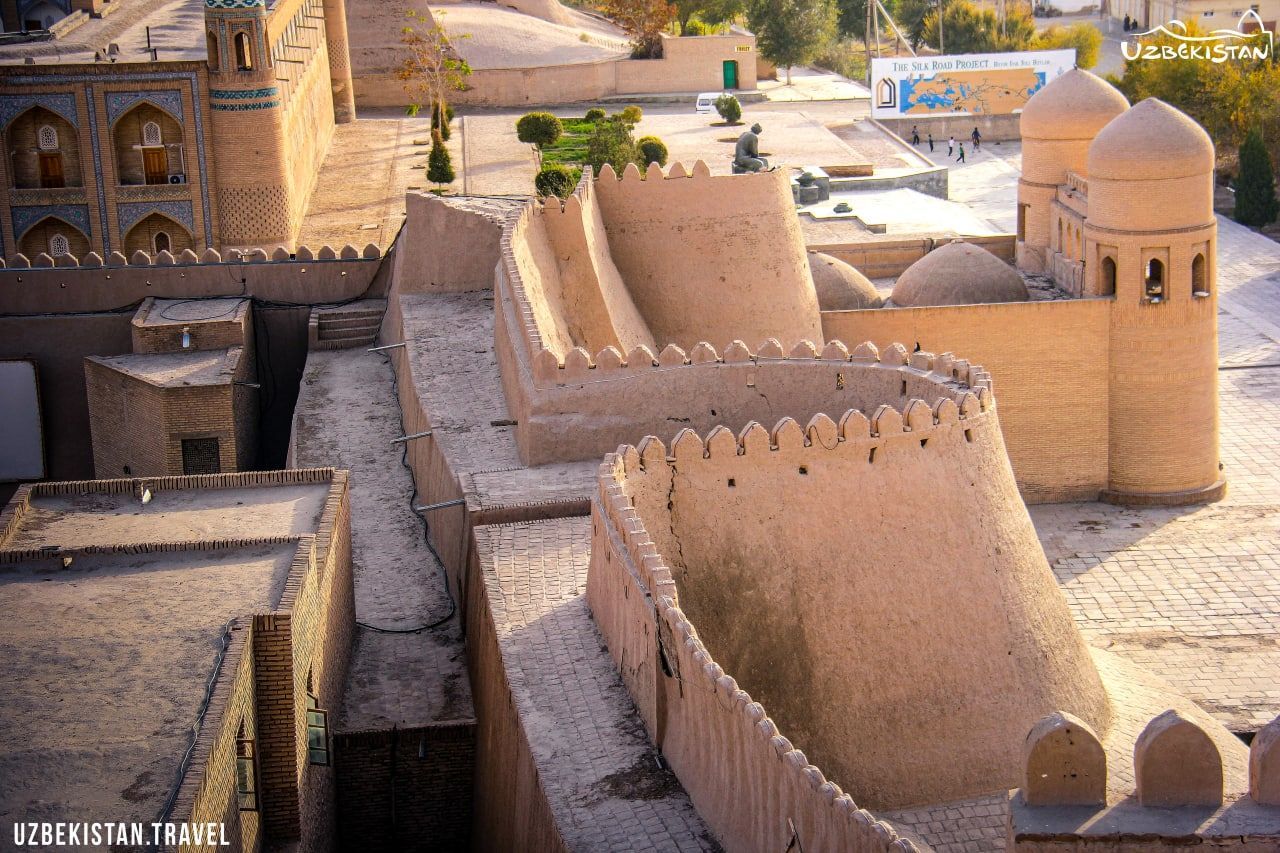
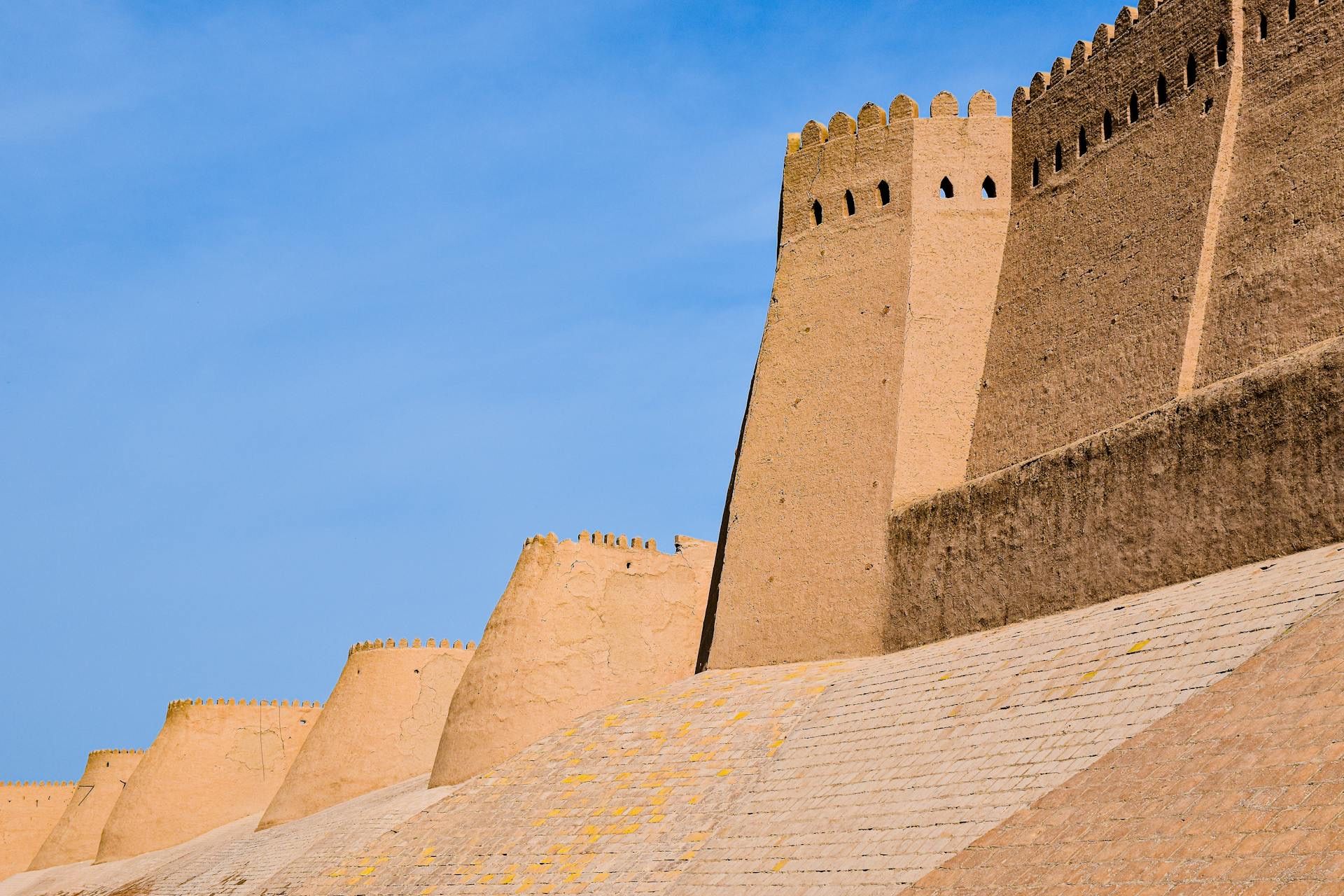
Itchan Kala is the inner fortress of Khiva, surrounded by massive walls up to 10 meters high and 6 meters thick. Built from baked brick, these walls were both a defense system and a symbol of the Khivan Khanate’s power.
Inside, more than 50 historical monuments are preserved — including madrasas, mosques, palaces, and minarets. The streets still keep their medieval layout, making the whole area feel like a living historical city.
The fortress has four main gates:
- Ata Darvaza (West Gate) — the main entrance for caravans, once home to the bazaar and customs point.
- Palvan Darvaza (East Gate) — linked to the caravan route to Khorasan, also associated with historical slave trade and military invasions.
- Tash Darvaza (South Gate) — ceremonial entrance for the khan and honored guests.
- Bakhcha Darvaza (North Gate) — connected to villages, gardens, and artisan workshops.
Together, these gates reflect Khiva’s role as both a fortified capital and a major Silk Road hub.
Kalta Minor — The Unfinished Symbol of Ambition
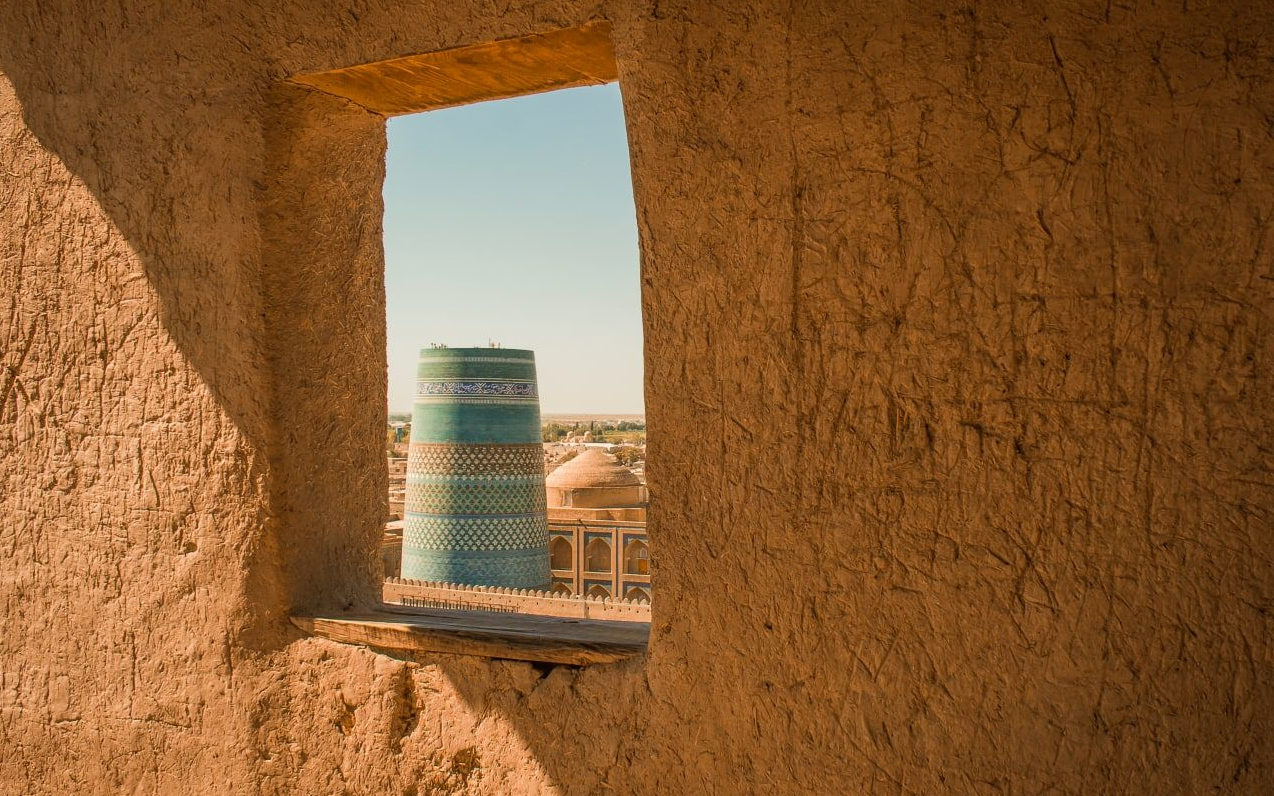
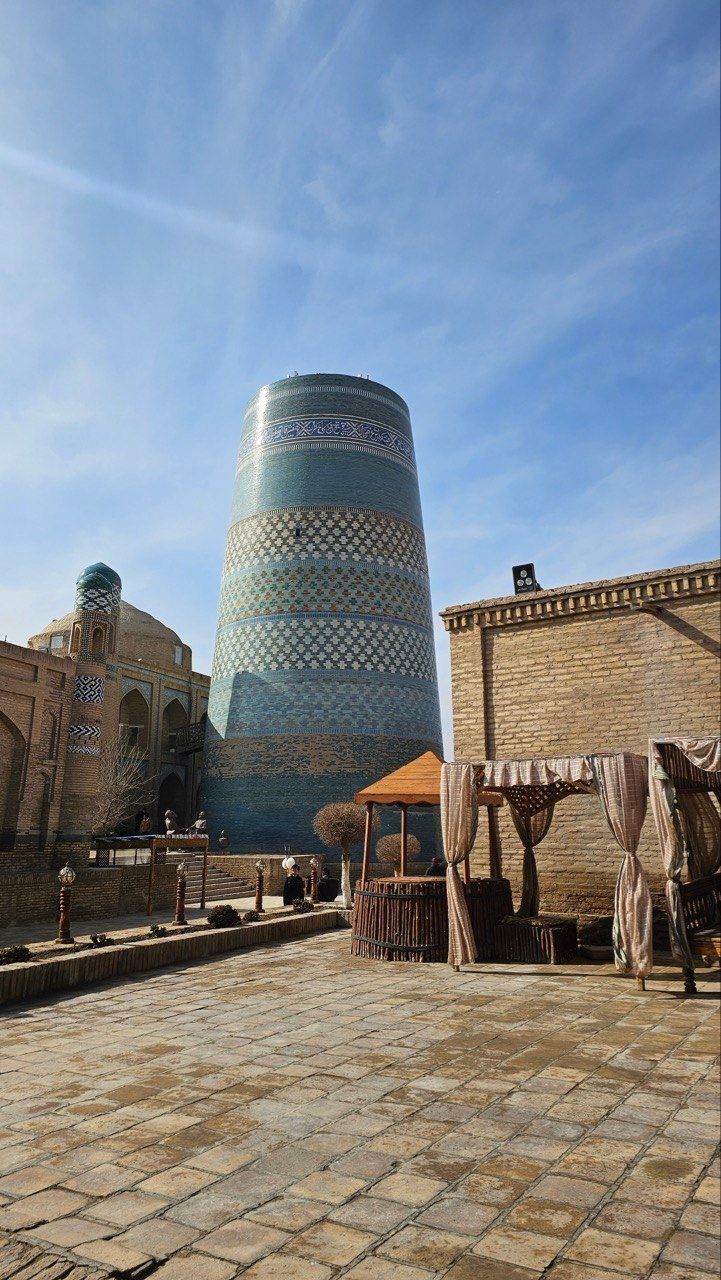
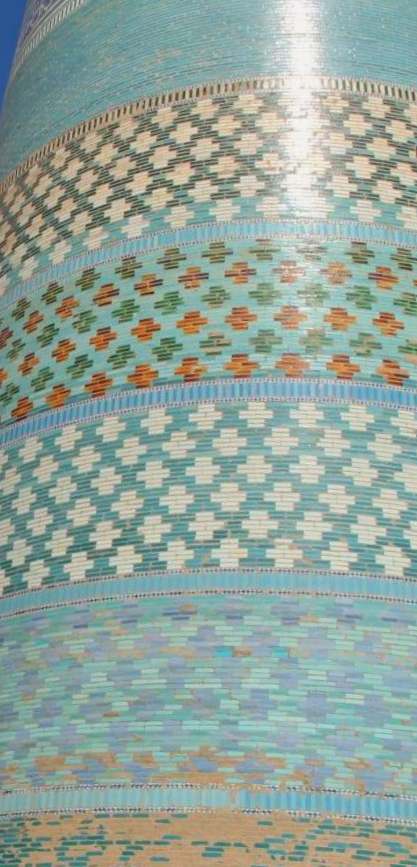
Kalta Minor Minaret was intended to be the tallest minaret in Central Asia, but construction stopped unexpectedly, leaving it unfinished at about 26 meters instead of the planned 70.
Even incomplete, it remains one of Khiva’s most iconic landmarks. Its wide base and bright turquoise tiles make it visually dominant in the cityscape.
The decoration uses glazed ceramics in shades of blue and green, forming horizontal bands and geometric patterns that give the structure a sense of completeness despite its unfinished top.
Muhammad Amin Khan Madrasa
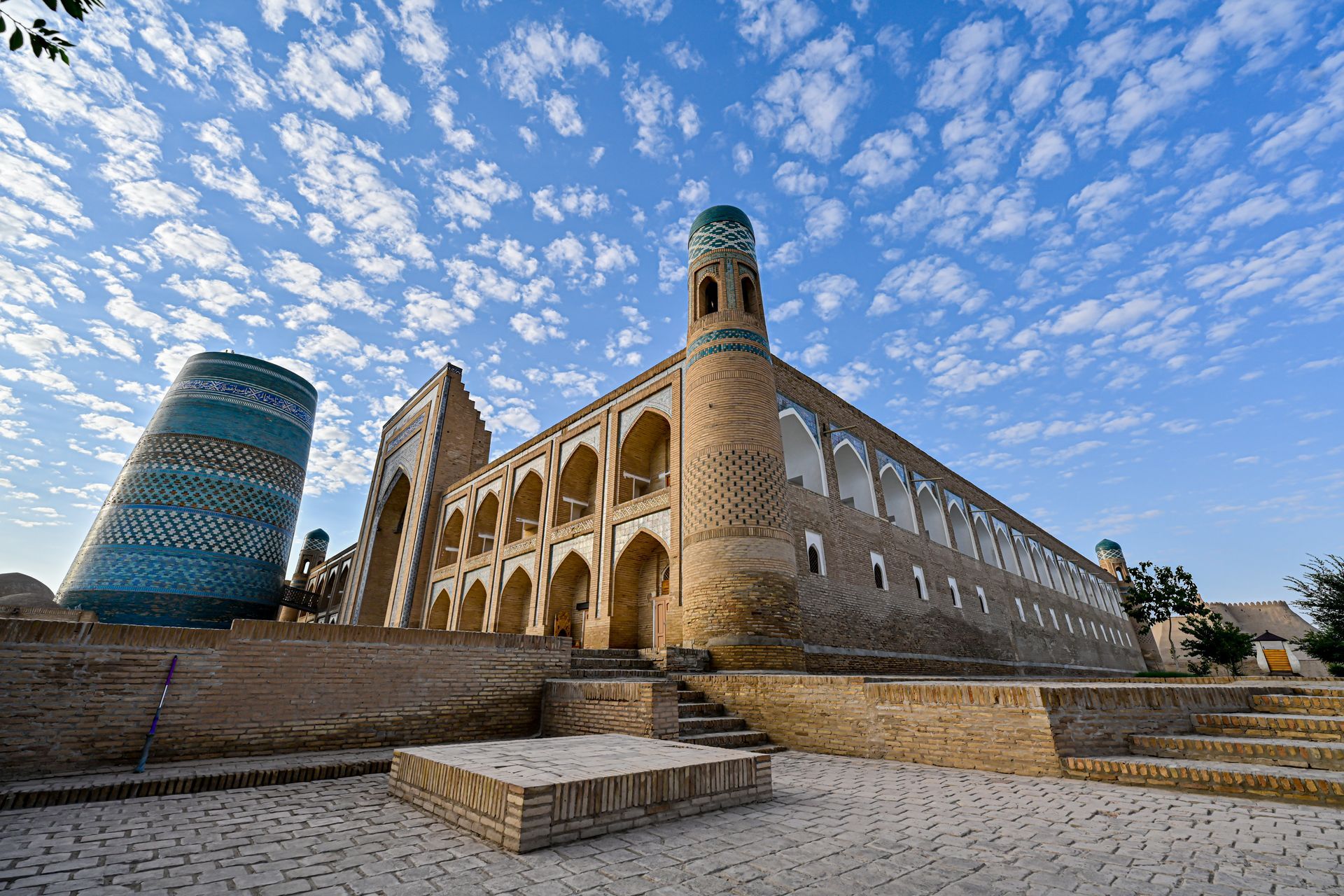
Muhammad Amin Khan Madrasah is the largest madrasa in Khiva, built in 1852–1855. It was one of the most important centers of Islamic education in the region, supported by significant waqf (endowment) income.
The building is known for its massive façade, portal design, and richly decorated entrance. Inside, it includes a complex layout with classrooms, a mosque, and student cells (hujras). For the first time in Khiva, some rooms were designed as two-level living spaces, showing architectural innovation of the period.
Despite its academic function, the madrasa is also a masterpiece of harmony and proportion, combining scale with refined decorative detail.
Tash Khauli Palace — The Stone Palace of the Khans
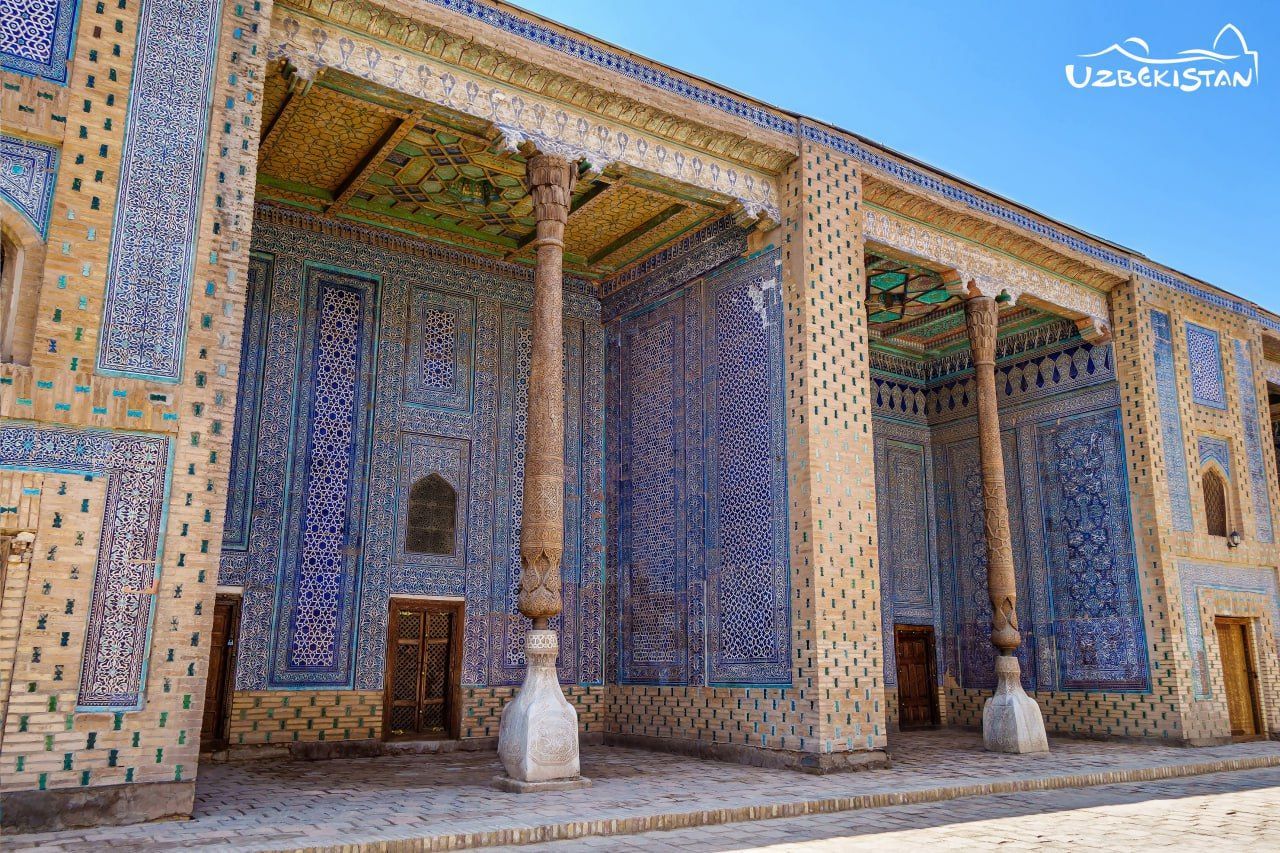
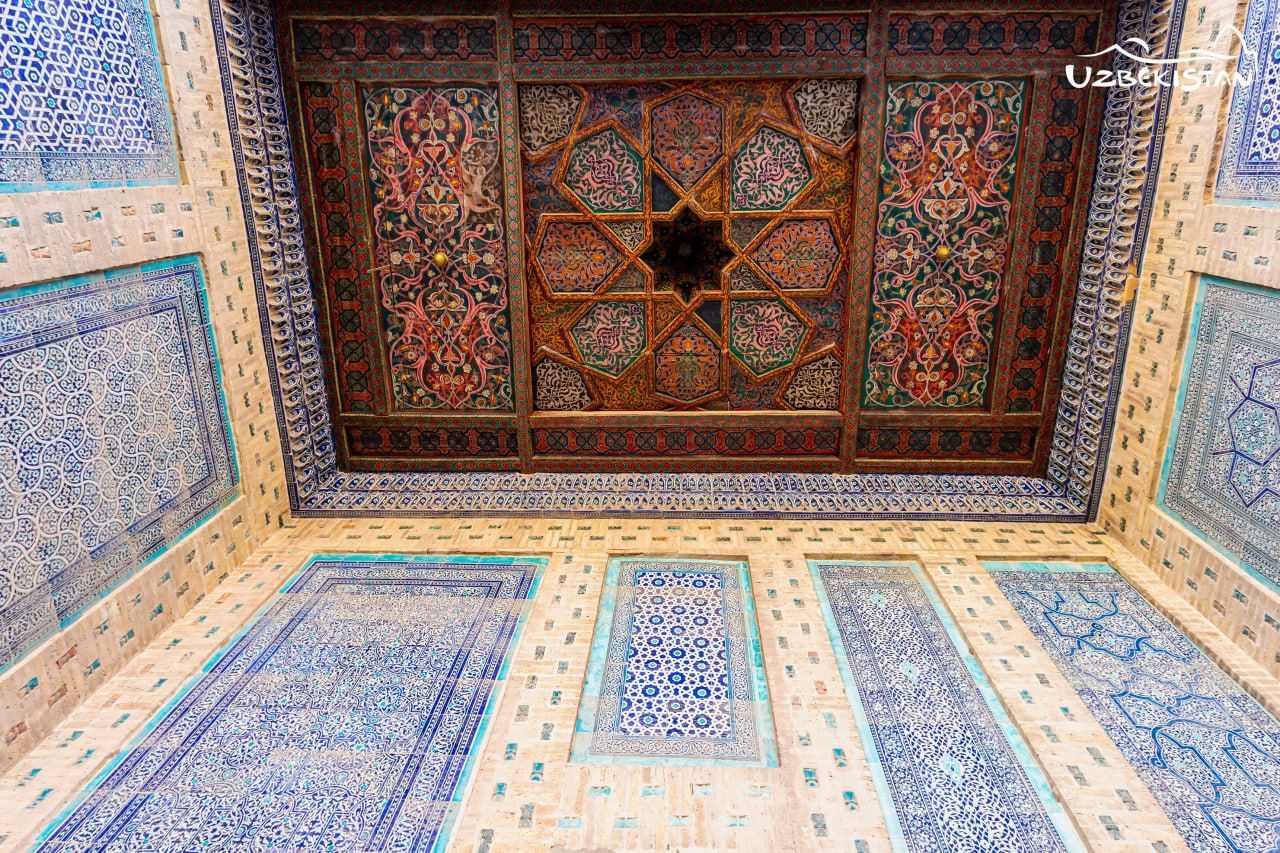
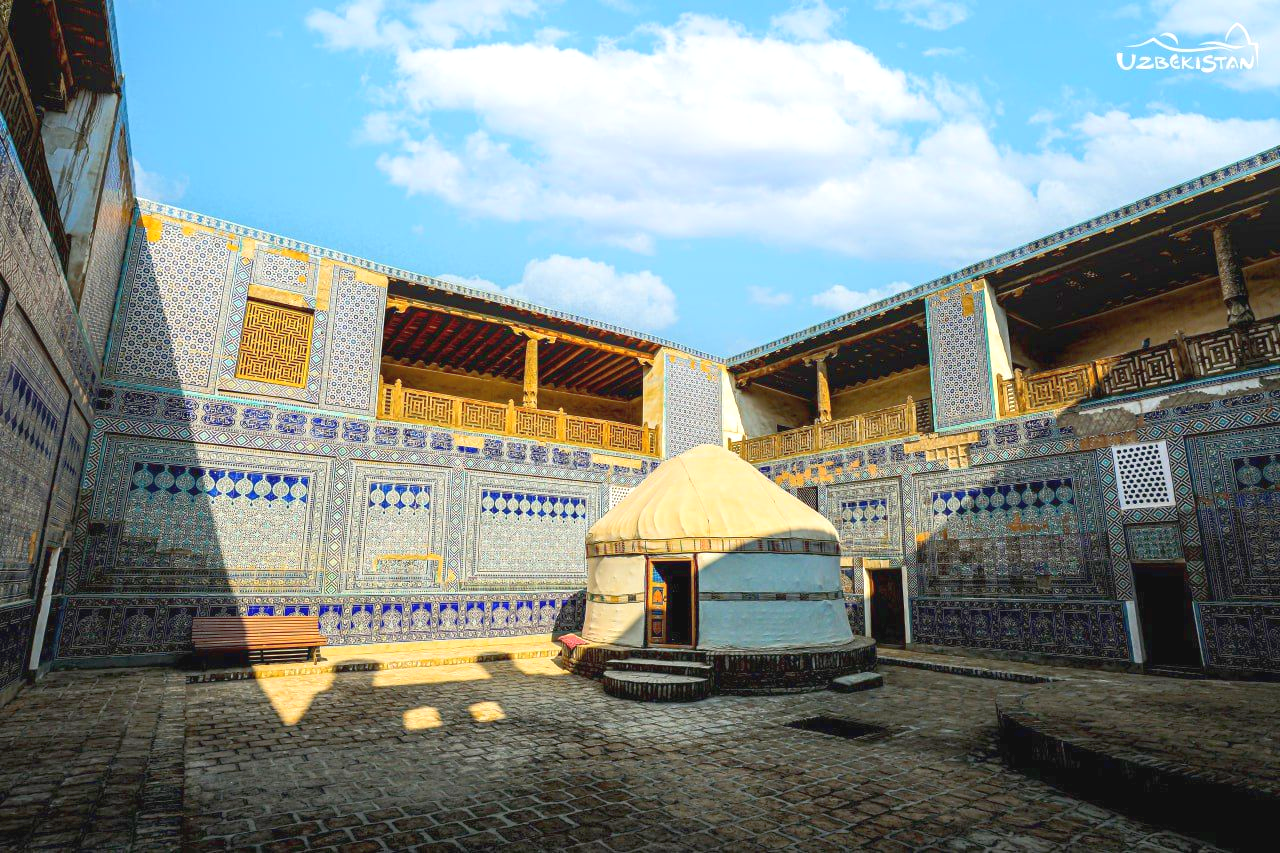
Tash Khauli Palace is one of Khiva’s most luxurious 19th-century palaces, built by Allakuli Khan.
It contains more than 160 rooms and multiple courtyards, including spaces for receptions, private life, and the harem. The palace is richly decorated with carved wood, ceramic tiles, and detailed ornamentation.
Beyond its beauty, the palace also reflects political life of the period, including diplomacy, court ceremonies, and strict internal organization of the khan’s household.
Juma Mosque — A Forest of Wooden Columns
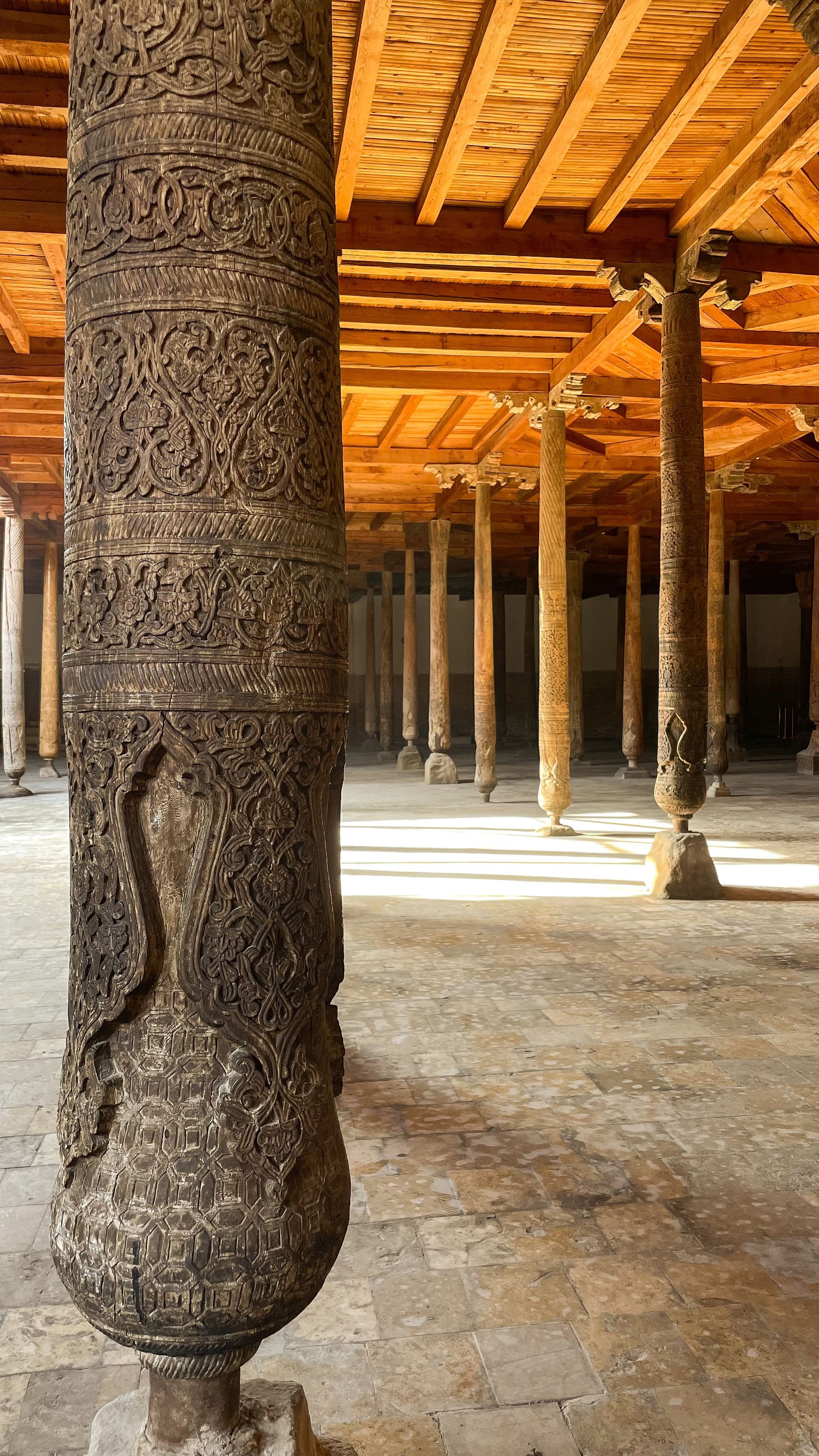
Juma Mosque is one of the oldest and most unique mosques in Khiva, famous for its 213 wooden columns supporting a flat roof instead of domes or arches.
Some of these columns date back centuries and were brought from different regions, each carrying its own carving style and history. The mosque’s structure reflects very early architectural traditions of Central Asia...
Islam Khodja Minaret
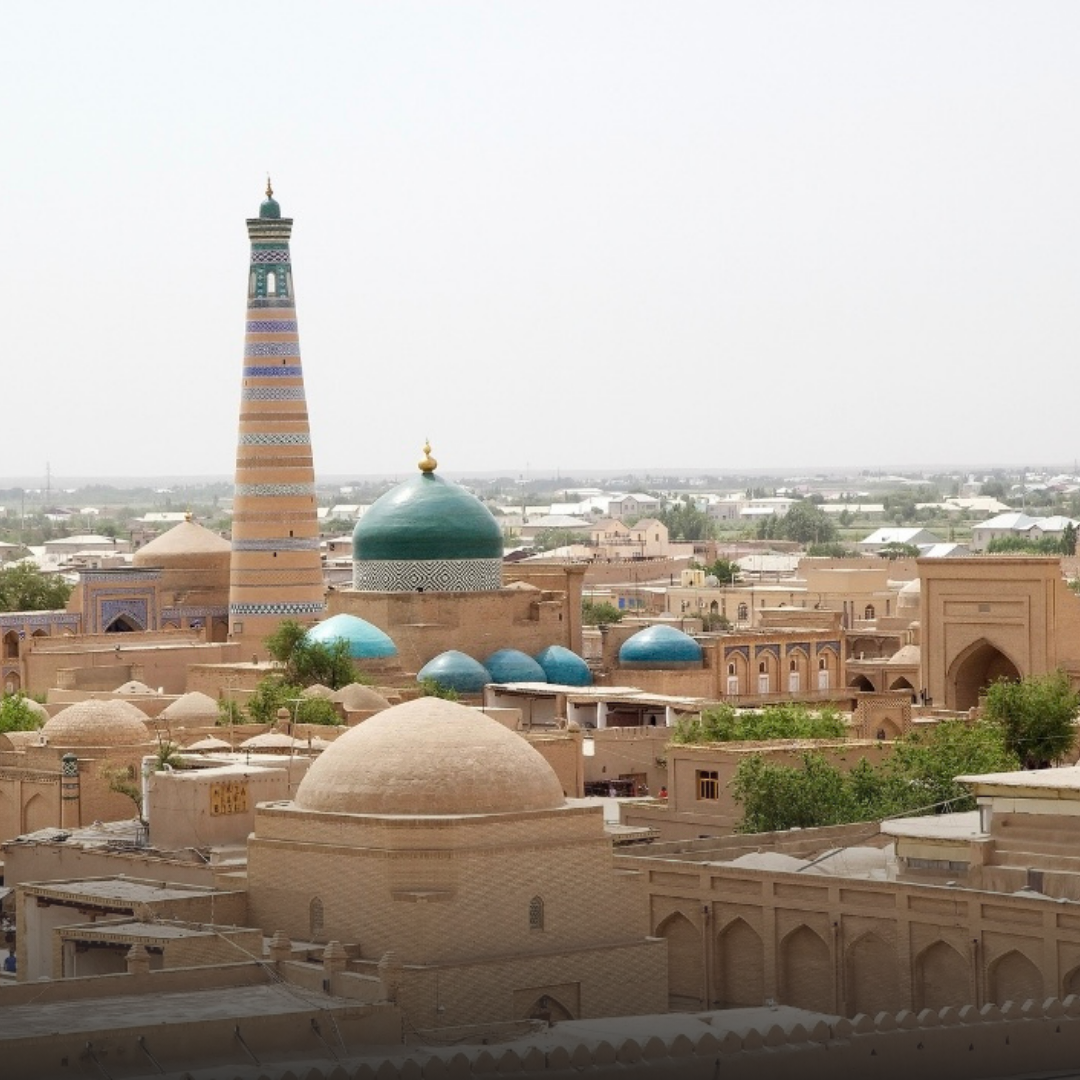
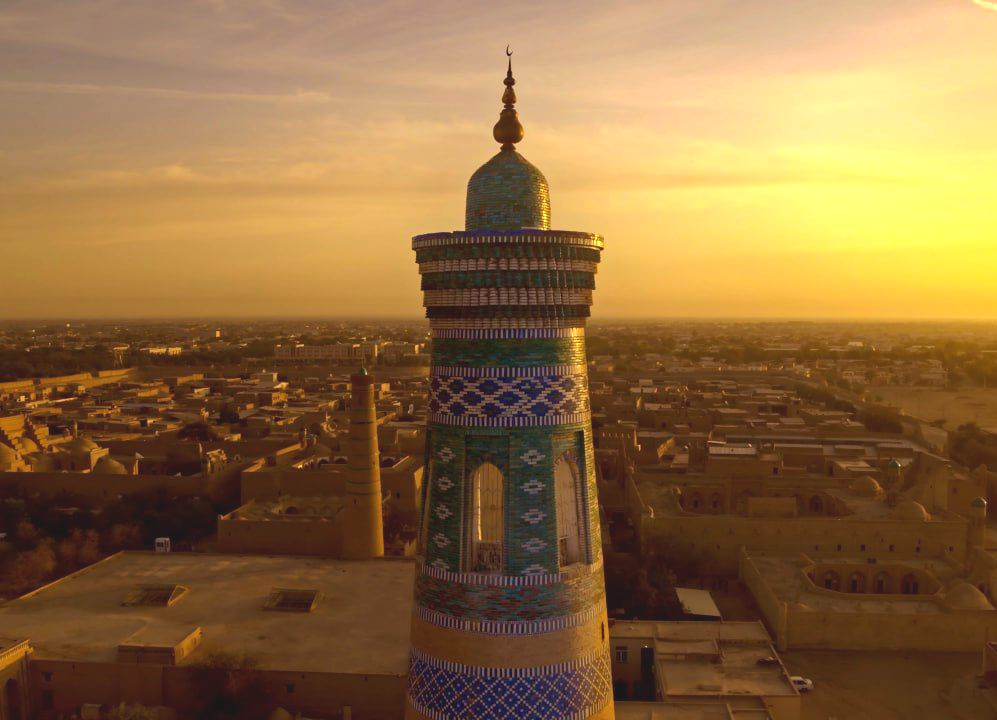
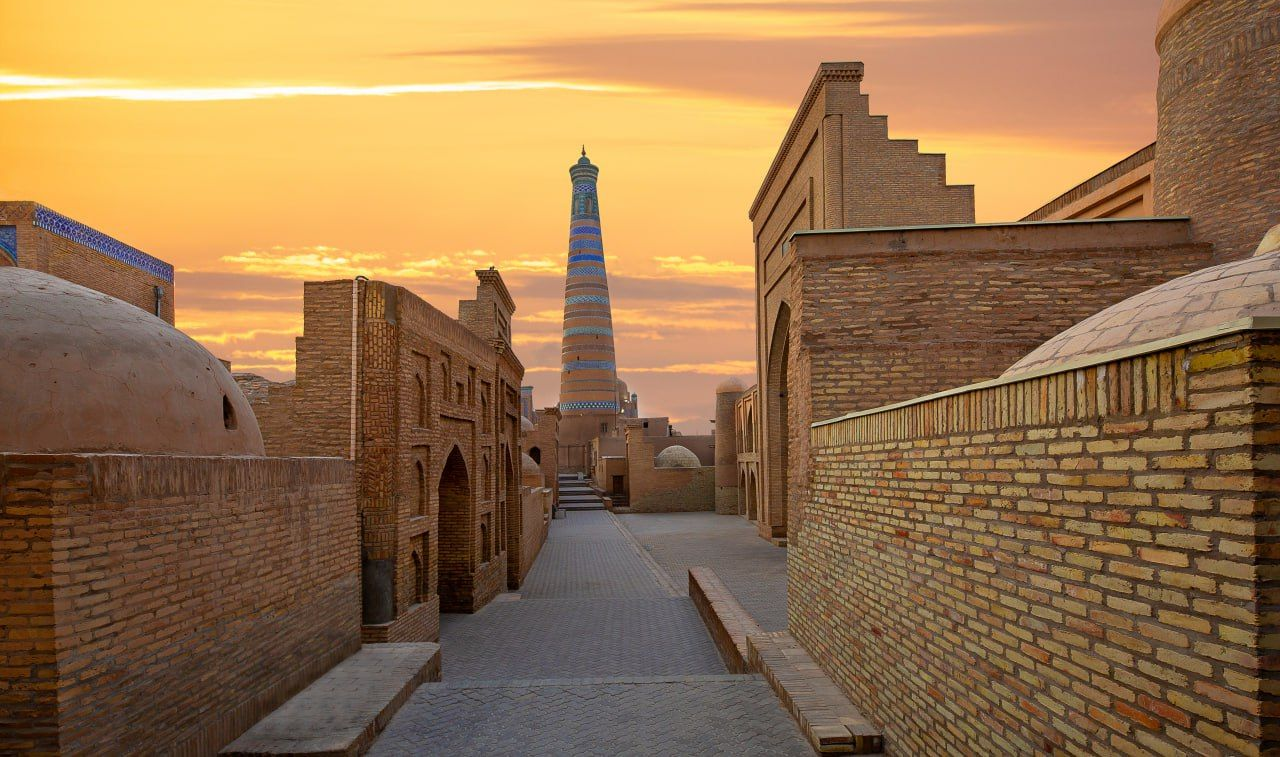
Islam Khodja Minaret is the tallest minaret in Khiva and one of the last great architectural projects built before the fall of the Khivan Khanate in the early 20th century.
Completed in 1910, the minaret rises 44.5 meters above the old city. Its proportions make it especially elegant — narrow, sharply tapered, and visually lighter than many older Central Asian minarets. Covered with bands of blue, turquoise, white, and dark green glazed tiles, it changes color throughout the day depending on the sunlight.
Today, the minaret is not only an architectural landmark, but also a symbol of Khiva standing between two eras — the traditional Islamic world and the beginning of modern Central Asia.
From the top, the view opens across the entire maze of Itchan Kala: turquoise domes, mudbrick rooftops, narrow alleys, and desert light stretching beyond the city walls.
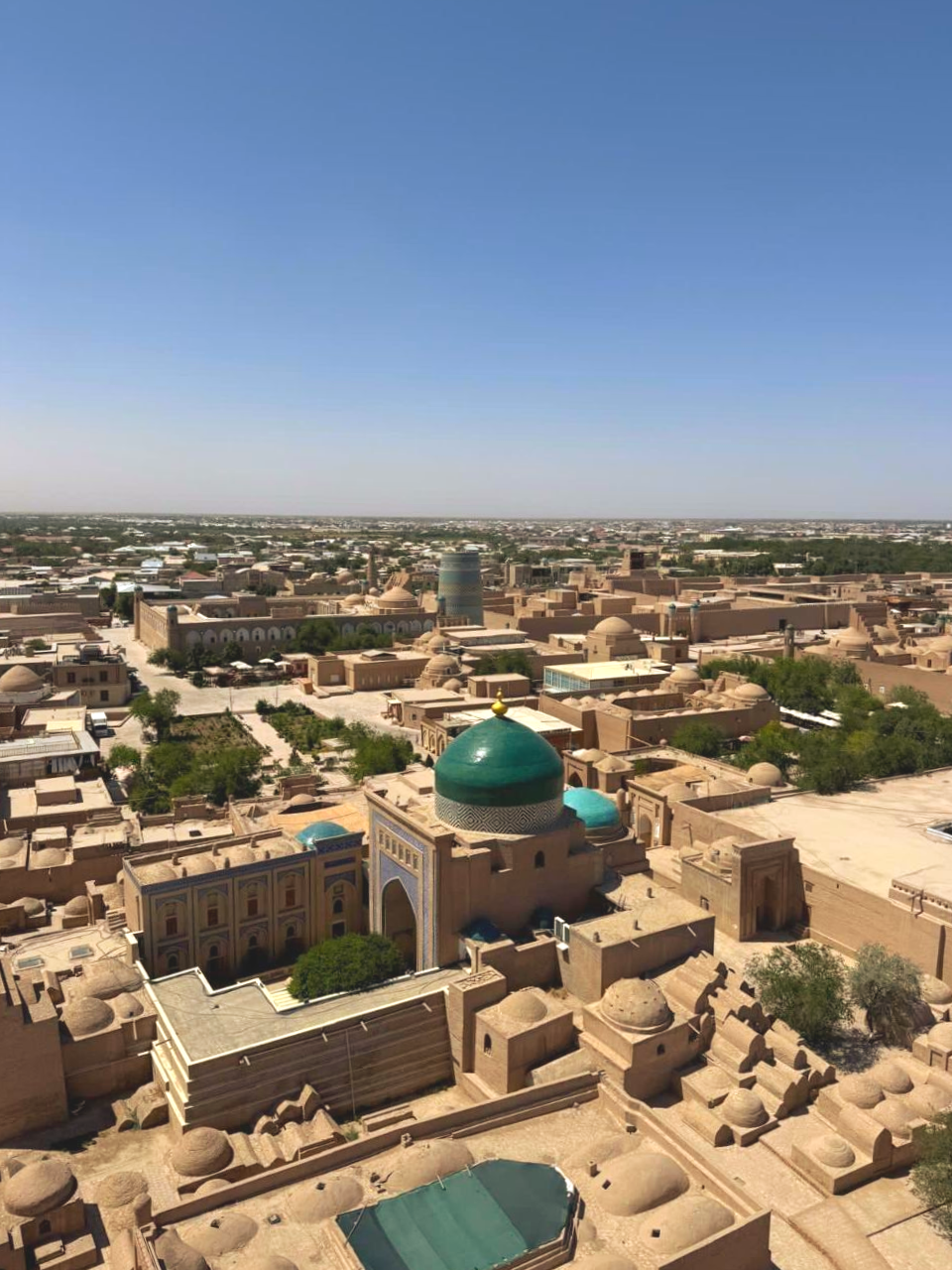
Pahlavon Mahmud Complex — The Spiritual Center of Khiva
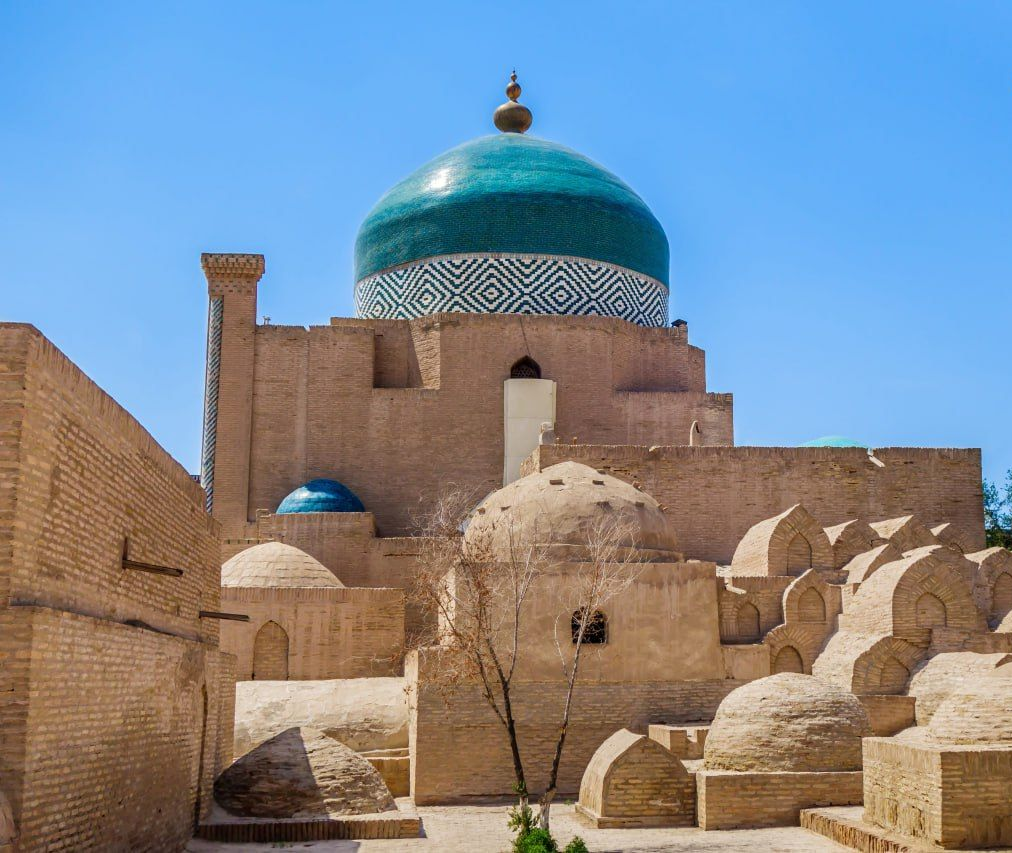
Pahlavon Mahmud Mausoleum is one of the most sacred places in Khiva, dedicated to Pahlavon Mahmud — a 13th-century poet, philosopher, craftsman, and legendary wrestler who later became the spiritual protector of the city.
According to local stories, he was known not only for his physical strength, but also for his generosity and sense of justice. One of the most famous legends says that during a wrestling match, he deliberately allowed himself to lose after seeing his young opponent’s terrified mother begging for mercy. In Khiva, this story became a symbol of strength guided by compassion rather than pride.
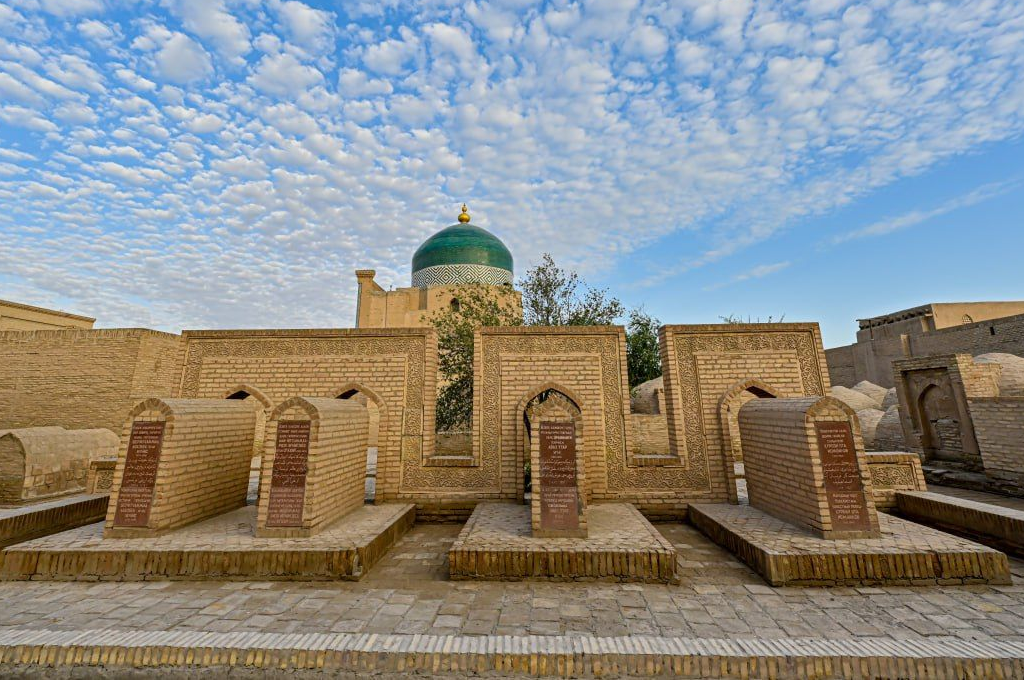
Over the centuries, his burial place turned into an important pilgrimage site. Later, Khivan khans chose to be buried near him, believing that resting beside Pahlavon Mahmud would bring spiritual honor and protection.
The complex seen today was largely built in the 19th century and includes a mausoleum, mosque, and khanaka (Sufi gathering place). Inside, the atmosphere feels calm and intimate despite the richness of the decoration — turquoise domes, detailed tilework, carved inscriptions, and poetic verses create one of the most atmospheric interiors in Khiva.